Pipeline

Robust Pipeline of Precision Therapeutics

At Atavistik Bio, we are developing a pipeline of allosteric therapeutics against validated targets to address patient populations with significant unmet needs. Our AMPSTM platform has enabled us to efficiently deliver differentiated small molecule allosteric inhibitors for clinically validated targets that achieve superior efficacy and tolerability profiles to improve patient outcomes.

Program/Target Indication
Discovery Lead Optimization IND Enabling Clinical STAGE
 
ATV-1601
AKT1E17K
Breast, Prostate, Endometrial, and other Solid Tumors
Stage - Clinical
ATV-1601 is an orally bioavailable selective allosteric AKT1 E17K inhibitor that is designed to provide enhanced on-target inhibition with the potential to overcome the tolerability and durability challenges observed with pan-AKT inhibitors.

AKT1 E17K mutation is a clinically validated oncogene that impacts greater than 40,000 cancer patients per year in the United States, with the highest prevalence in breast, endometrial, and prostate cancer. Pan-AKT inhibitors have significant efficacy limitations resulting from insufficient AKT1 target engagement as well as on-target inhibition of AKT2, which causes hyperglycemia and results in treatment discontinuation or dose-reductions in a considerable subset of patients. ATV-1601 overcomes this limitation by selective allosteric inhibition of the disease-driving AKT1 E17K mutation.

In multiple preclinical studies in clinically relevant AKT1 E17K-driven patient-derived tumor models, 
ATV-1601 has demonstrated dose-dependent anti-tumor activity leading to profound and durable tumor regression at well-tolerated doses without causing hyperglycemia. We anticipate filing an investigational new drug (IND) application and initiating a first-in-human study in patients with AKT1 E17K mutant tumors in early 2025.
Program 2
AKT1
HHT and Vascular Malformations
Stage - Clinical
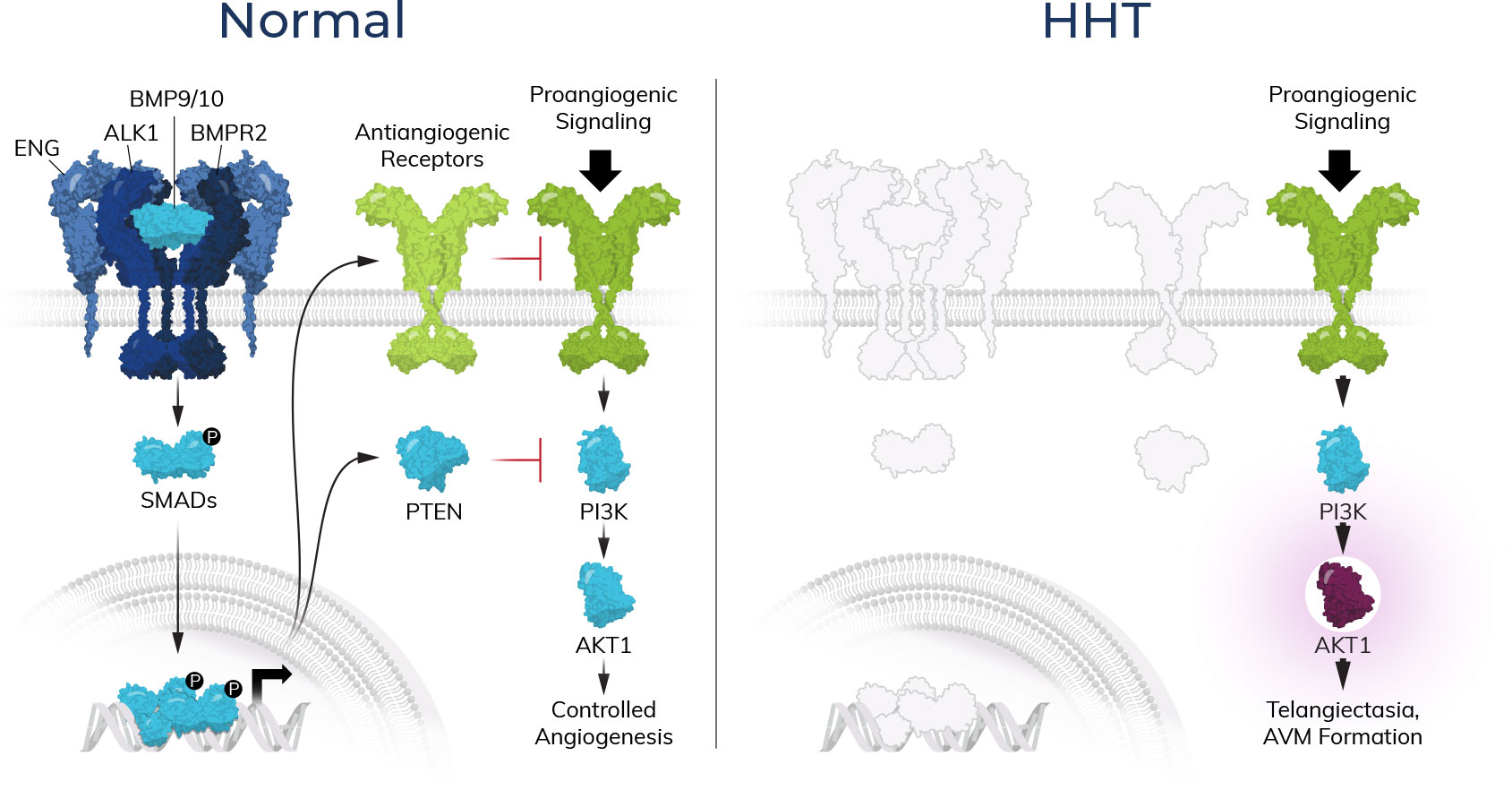
Hereditary Hemorrhagic Telangiectasia (HHT) is a severe bleeding disorder that affects more than 1.6 million people globally, with no approved therapies currently available. AKT1 hyperactivation is a hallmark of HHT and has been shown to drive the vascular pathology of HHT.

Selectively inhibiting AKT1, the primary AKT isoform and driver of abnormal endothelial growth implicated in HHT, offers a novel and potentially disease-modifying therapeutic approach for this difficult disease. Although there has been substantial investment in pan-AKT inhibitors, their use is limited by AKT2-driven toxicities, most notably hyperglycemia, which impact tolerability and restrict their use for chronic dosing. Atavistik Bio has developed an oral allosteric inhibitor that selectively inhibits AKT1, overcoming the shortcomings of pan-AKT inhibitors and offering improved therapeutic potential and tolerability.

Atavistik has developed an oral allosteric inhibitor that selectively inhibits AKT1, overcoming the shortcomings of pan-AKT inhibitors and offering improved therapeutic potential and tolerability. Anticipate initiating clinical trial in HHT early 2026.
Program 3
JAK2V617F
Myeloproliferative neoplasms
Stage - Lead Optimization
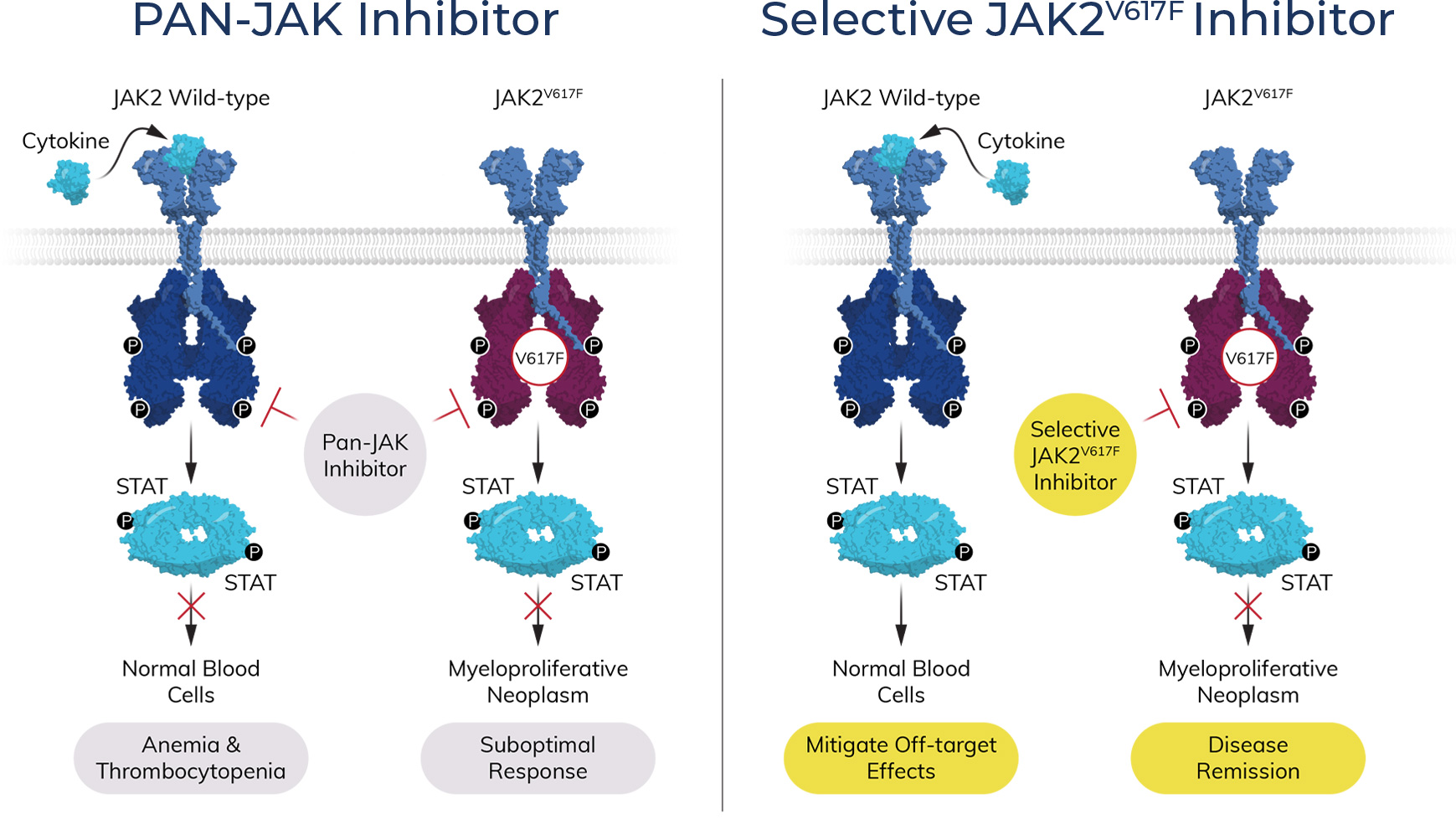
JAK2V617F is the most common driver mutation in myeloproliferative neoplasms (MPNs), affecting ~95% of polycythemia vera (PV), 60% of essential thrombocythemia (ET) and 55% of myelofibrosis (MF) patients. Selectively targeting JAK2V617F has the potential to reduce mutant allele burden, preserve normal bone marrow function, and have a disease modifying impact that will substantially improve long term outcomes for patients with MPNs.

Approved pan-JAK inhibitors, such as ruxolitinib, provide symptom relief, but non-selectively inhibit both mutant and wild-type JAK2. This limits their ability to reduce JAK2V617F mutant allele burden and can disrupt normal blood cell production regulated by wild-type JAK2, contributing to adverse events and treatment discontinuation.

Atavistik has discovered novel allosteric JAK2V617F selective inhibitors that suppress mutant-dependent signaling while sparing wild-type JAK2. Compounds with favorable PK properties and tolerability are being advanced for further development. These candidates have the potential to address the significant unmet needs of patients with MPNs by providing disease-modifying efficacy while avoiding off-target hematological effects associated with wild-type JAK inhibition.
Metabolic Disease
Program 4
Undisclosed
Hepatic Encephalopathy
Stage - Lead Optimization
Partnerships
Partner: Pfizer
Undisclosed
Oncology
Stage - Discovery

exAKT Clinical Trial

This is a Phase 1, open-label study to evaluate the safety and tolerability of ATV-1601 administered orally in adults with AKT1 E17K-mutant advanced solid tumors and also in HR+/HER2- advanced and metastatic breast cancer, with or without fulvestrant.

For patients or caregivers to learn more about the exAKT clinical trial, please visit ClinicalTrials.gov (NCT07038369)

exAKT Clinical Trial Logo

Study sites are currently enrolling patients.

Please contact studydirector@atavistikbio.com for more information.